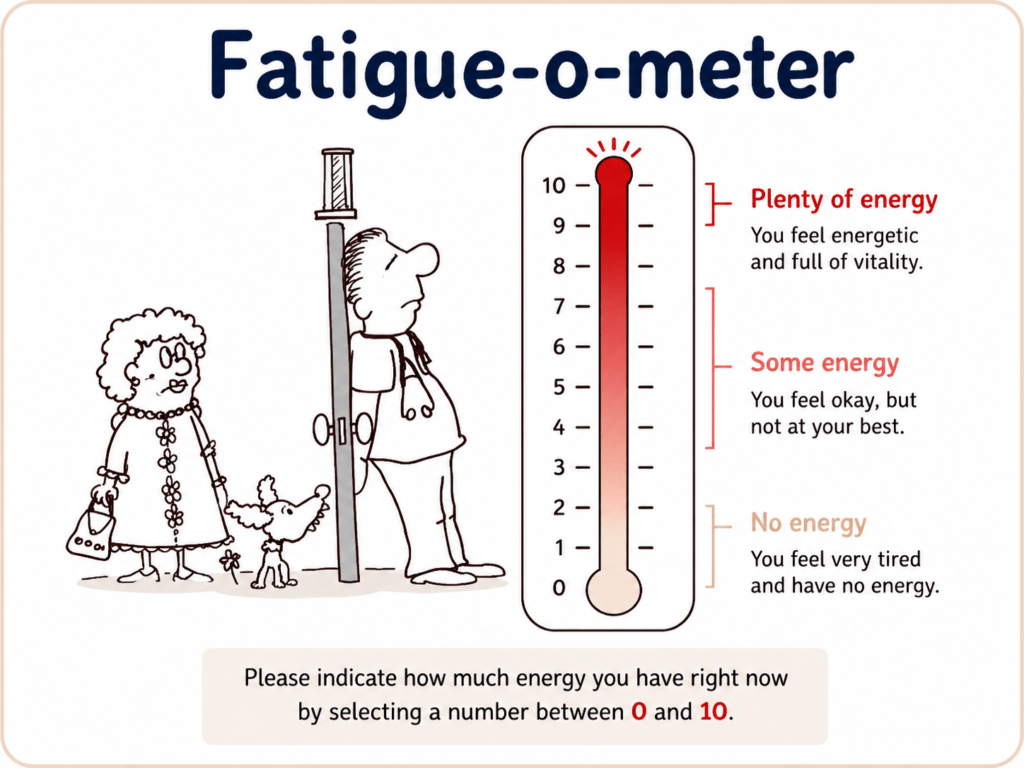
Fatigue is one of the most common and disabling symptoms experienced by people living with a chronic disease, including sarcoidosis and other interstitial lung diseases. It can profoundly affect daily functioning, social life, work participation, concentration, and overall quality of life. Yet fatigue often remains poorly recognized, partly because there is no objective biomarker or laboratory test that can adequately measure or quantify it.
To better assess fatigue in a practical and reliable way, the Fatigue Assessment Scale (FAS) was developed. The FAS is a short and easy-to-complete self-report questionnaire consisting of 10 questions that evaluate both physical and mental fatigue. Because of its simplicity and strong scientific validation, the questionnaire can easily be used in both clinical practice and research settings.
Over the years, the FAS has become one of the most widely used fatigue questionnaires in chronic disease research. Studies have demonstrated that the FAS is a reliable and valid instrument in a broad range of diseases and conditions, including sarcoidosis, idiopathic pulmonary fibrosis, rheumatoid arthritis, stroke, cancer, and chronic heart failure. The questionnaire is currently available in more than 20 languages and is used worldwide in clinical studies and daily patient care.
The ild care foundation continues to receive requests from researchers, healthcare professionals, and institutions across the world seeking permission to use and translate the FAS for clinical studies and patient care programs. This ongoing international interest highlights the growing recognition of fatigue as an important patient-reported outcome that deserves systematic attention.
For more information about how to use the Fatigue Assessment Scale (FAS), translations, and conditions of use, please visit: LINK